Free driving lesson tutorial
Pedestrian crossings
Zebra, pelican, puffin, toucan and equestrian — how to recognise and approach every type of crossing with confidence.
There are five main types of pedestrian crossing — zebra, pelican, puffin, toucan and pegasus (equestrian). The bird names make them easy to muddle up, but each has a memorable difference, and once you know them, test-day crossings hold no surprises.
Zebra crossings
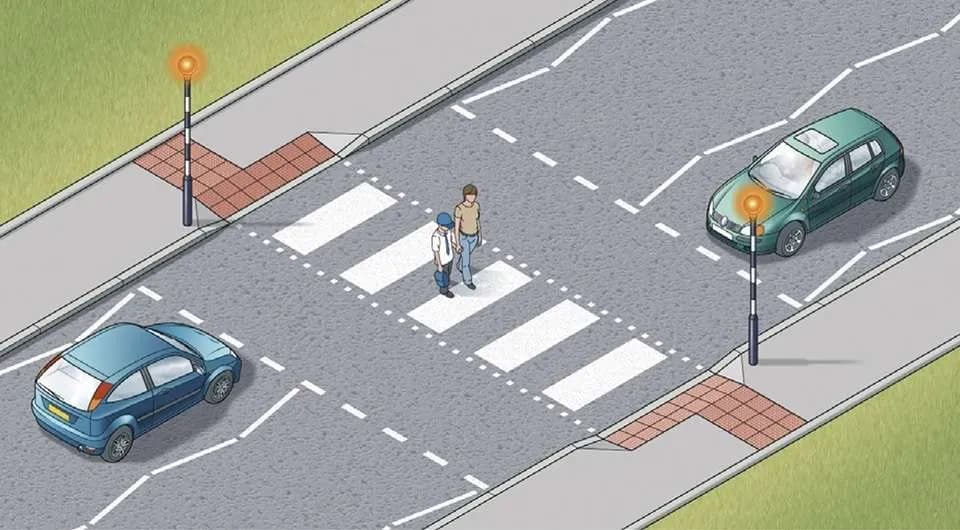
Named after the black and white stripes on the road. As you approach:
- •Look for pedestrians around or near the crossing and be prepared to stop for them.
- •Check the traffic behind you — you may need to stop, and you need to know how that affects others.
- •You MUST give way to pedestrians on the crossing, and wait until they have left it before proceeding.
- •A zebra crossing with a central island counts as two separate crossings.
- •You must not park on or near a zebra crossing — the zig-zag lines mark out this area.
- •You must not overtake within the zig-zag lines or on the crossing itself.
Pelican crossings
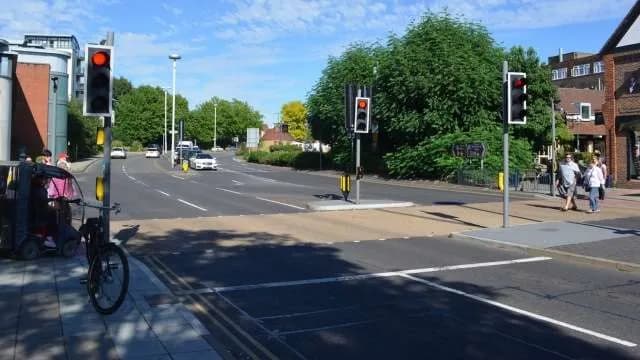
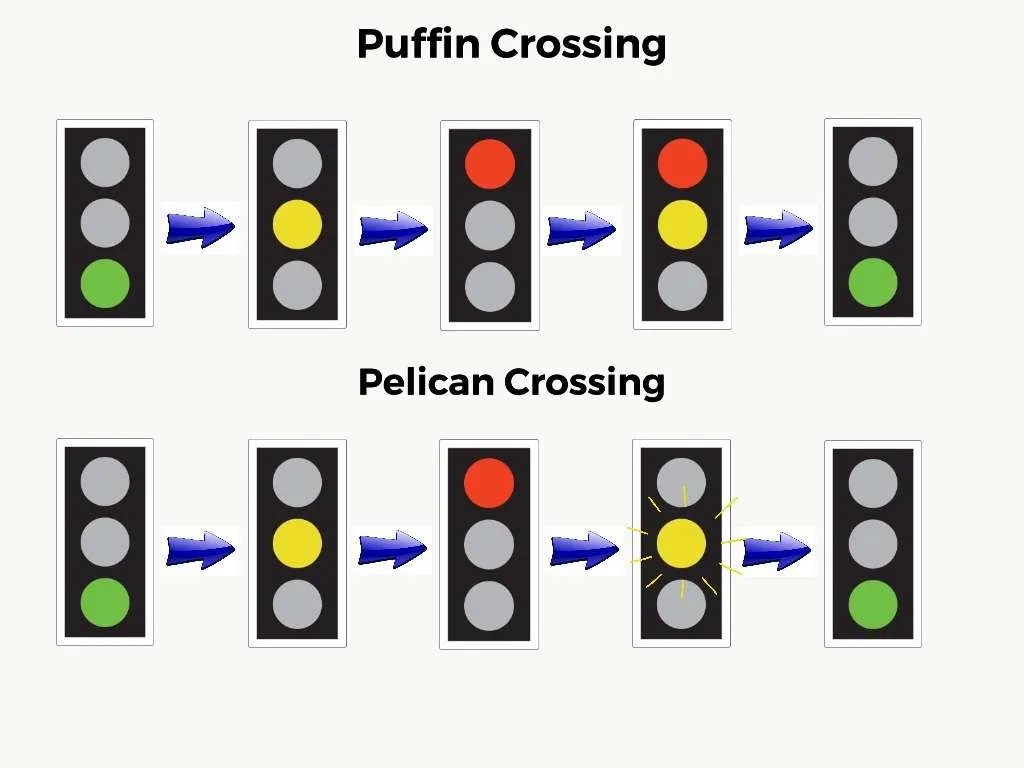
The pelican is the traffic-light crossing with a flashing amber light — which means you can go once the crossing is clear. An easy way to remember it: “you peliCAN go at a flashing amber if it's clear.”
- •Check the traffic behind you as you approach — you may need to stop.
- •Check for pedestrians at or near the crossing.
- •Be prepared for the lights to change if a pedestrian is nearby.
- •You must not park or overtake on the zig-zag lines or the crossing.
Puffin crossings
Approach a puffin exactly as you would a pelican. The difference is the light sequence: instead of a flashing amber, puffin crossings use sensors to detect when pedestrians have finished crossing — you'll get solid amber and red, followed by green, just like normal traffic lights.
Toucan & equestrian crossings
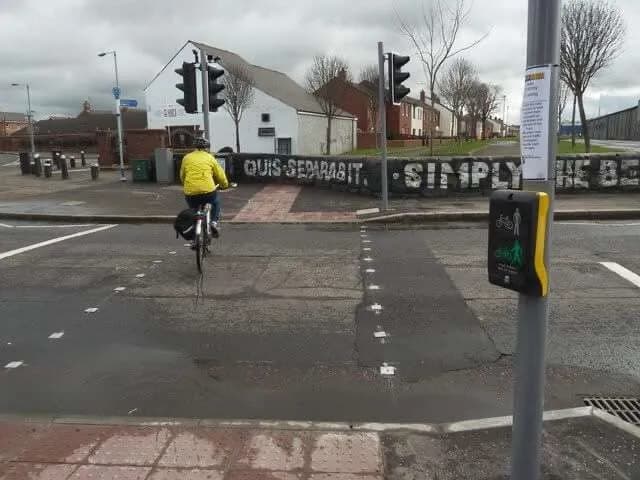
Both work like a puffin crossing. Toucan crossings are shared by pedestrians and cyclists, so you'll find them near cycle routes — remember it because “two can cross a toucan crossing.”
Pegasus (equestrian) crossings are used by horse riders — they sit higher, with a second button at rider height.
Keep learning
Cockpit Drill & Car Controls
Your very first lesson — seat, mirrors, and what every control does.
Moving Off & Stopping
The POM and MSPSL routines for pulling away safely and stopping under control.
Junctions
Emerging, turning and the MSPSL routine — with real local examples.
Roundabouts
Lane discipline, signalling and judging gaps with confidence.
Send us an enquiry
Every Cowley's pupil gets these tutorials plus the pupil app and theory practice free — get in touch to book your lessons.
Ready to get on the road?
Book your driving lessons with Cowley's School of Motoring and you won't look back — except in those mirrors.